
Massage Chair Vending Machine: Can Empty Space Become a Business?


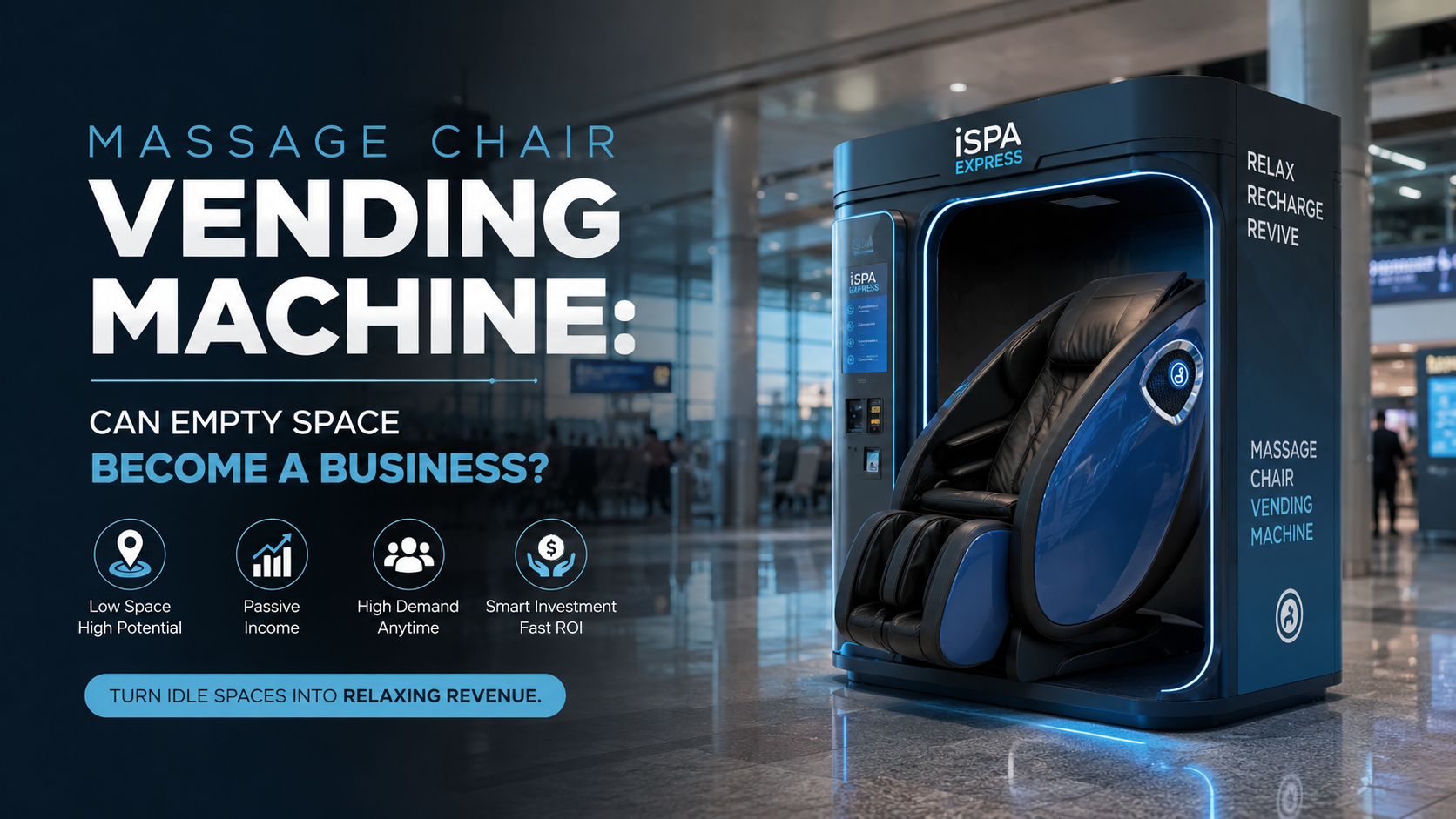
Massage Chair Vending Machine: Can Empty Space Become a Business?
What if that unused corner in your mall, hotel, gym, airport, or office could actually earn money? It doesn't necessarily need another vending machine selling snacks or drinks. It could become something people actively seek out: a few minutes of relaxation.
That is where a massage chair vending machine creates an interesting business opportunity. Combining automated technology with on-demand wellness, these stations allow people to enjoy a quick massage without an appointment, therapist, or dedicated treatment room.
For property owners and entrepreneurs, the idea goes beyond selling massage sessions. It is about turning existing foot traffic and underused space into something useful.
What Is a Massage Chair Vending Machine?
A massage chair vending machine is essentially a self-service relaxation station.
Instead of purchasing a traditional massage chair for private home use, commercial operators place automated massage stations in locations where people naturally spend time.
A typical experience can be remarkably simple:
- Find the massage station
- Scan a QR code or select a payment option
- Choose a session
- Sit back
- Relax
Modern systems can also use connected technology to support remote monitoring and operational management. Gagake's iSPA system, for example, uses cloud-based technology for monitoring and data exchange while its stations are designed for public environments.
The result is a wellness experience that can operate with minimal day-to-day involvement from the host location.
Why Are Automated Wellness Experiences Growing?
People are becoming accustomed to self-service. They order food from kiosks, check themselves into hotels, pay with their phones, unlock vehicles through apps, and use automated services throughout their daily routines.
Wellness is beginning to follow the same direction.
A self service massage chair fits this behaviour perfectly because it removes several traditional barriers.
There is no need to:
- Make an appointment
- Find a therapist
- Commit to a lengthy treatment
- Enter a traditional spa
- Coordinate schedules
Someone can simply discover the station, decide they want a break, and use it. That makes the experience especially suitable for high-traffic locations.
Where Can These Massage Stations Work?
The location may be the most important part of the entire business model.
A massage station placed somewhere with little foot traffic will struggle, regardless of how advanced the technology is. But imagine placing one where people already have reasons to pause.
Hotels. Airports. Shopping centres. Gyms. Corporate offices. Convention centres. Entertainment venues.
These environments naturally create moments when people are waiting, resting, shopping, travelling, or taking a break.
Gagake currently positions its iSPA stations across these types of high-traffic environments, with the concept designed to provide relaxation while creating an additional opportunity for location partners.
Is This Really a Passive Income Business in Canada?
The term “passive income” gets thrown around online far too easily.
No business is completely passive. There is still equipment to manage, customer demand to consider, and location performance to monitor.
However, an automated massage station can reduce the amount of hands-on involvement compared with many traditional service businesses.
That makes a vending massage chair business interesting for entrepreneurs who want a technology-enabled business model rather than one that depends entirely on employees.
The right partnership can also shift some operational responsibilities away from the location owner. For example, Gagake's location partnership model states that it handles setup, maintenance, and operations, while partners receive a share of revenue.
What About Massage Chair Rental?
Buying equipment isn't necessarily the only way businesses can explore the concept.
Massage chair rental and partnership-based arrangements can offer alternative ways to introduce massage stations into commercial properties, depending on the provider and business model.
This can be particularly appealing to property owners who want to test customer demand before committing significant capital to new wellness infrastructure.
The important questions aren't simply “How much does the chair cost?” Instead, businesses should consider:
- Who owns the equipment?
- Who maintains it?
- Who handles customer support?
- How are payments processed?
- How is revenue divided?
- What happens if the location underperforms?
- How much space is required?
Understanding the complete operating model is more important than focusing only on the equipment price.
The Hidden Value of Unused Space
Here's where the concept becomes especially interesting.
Commercial property is expensive. Every square foot has value. Yet many businesses have corners, waiting areas, corridors, lounges, and other spaces that don't actively contribute to the customer experience.
A compact wellness station can potentially give those areas a purpose.
Instead of:
Empty space → no customer interaction
You can create:
Empty space → wellness experience → customer engagement → potential revenue
That doesn't mean every unused corner should contain a massage chair. The location still needs to make sense. But where foot traffic and waiting time already exist, the opportunity becomes much more compelling.
Could This Work in Canada?
Canada's large cities have plenty of environments where people spend time away from home: airports, shopping centres, hotels, fitness facilities, offices, and entertainment venues.
In fact, self-service massage experiences are already appearing in Canadian commercial locations. For example, the Premium Outlet Collection Edmonton International Airport lists an iSPA Lounge as a self-service massage-chair relaxation destination for shoppers.
That demonstrates an important point: the concept doesn't have to be limited to a traditional spa environment.
It can become part of the places people already visit.
What Makes a Good Location?
Not every busy location is automatically a good location.
The strongest opportunities usually combine several factors:
High Foot Traffic
More people passing through means more potential customers.
Waiting Time
People are more likely to use a relaxation service when they have time to spare.
Visibility
If customers don't notice the station, they won't use it.
Comfortable Placement
The area should feel appropriate for relaxing rather than sitting in the middle of a chaotic walkway.
Suitable Audience
Travellers, shoppers, professionals, gym members, and hotel guests can all have different reasons for using a massage station.
The goal is to match the station with the behaviour of the people around it.
The Future of the Automated Wellness Business
The automated wellness business is an interesting intersection between technology, hospitality, retail, and self-care.
It doesn't ask people to change their routines. Instead, it places relaxation inside routines that already exist.
- Someone shopping can take a break.
- A traveller can recharge before boarding.
- A hotel guest can relax after sightseeing.
- An employee can step away from their desk.
- A gym member can unwind after a workout.
That flexibility is perhaps the biggest strength of the model.
A Business Model Built Around “Just a Few Minutes”
People often say they don't have time to relax. But sometimes they actually do.
- They have 15 minutes before a meeting.
- Twenty minutes before boarding.
- Ten minutes while waiting for someone.
- Half an hour before hotel check-in.
The opportunity is to make those minutes useful.
Gagake iSPA Express is building its Canadian presence around this idea: creating accessible self-service relaxation stations while giving commercial location partners an opportunity to generate additional revenue from their spaces.
The next evolution of wellness may not always involve visiting a spa. Sometimes, it may simply involve finding a comfortable chair at exactly the right moment.


Frequently Asked Questions
Users typically select a session, pay through an available payment method, and use the chair without needing staff assistance.
Common locations include hotels, airports, shopping centres, gyms, offices, and other high-traffic venues.
Depending on the business and partnership model, commercial massage stations can create an additional revenue opportunity from existing space.
Gagake states that each iSPA station requires approximately 20 square feet, although the exact setup depends on the location and configuration.