
Gym Massage Chair: A Smarter Approach to Post-Workout Recovery


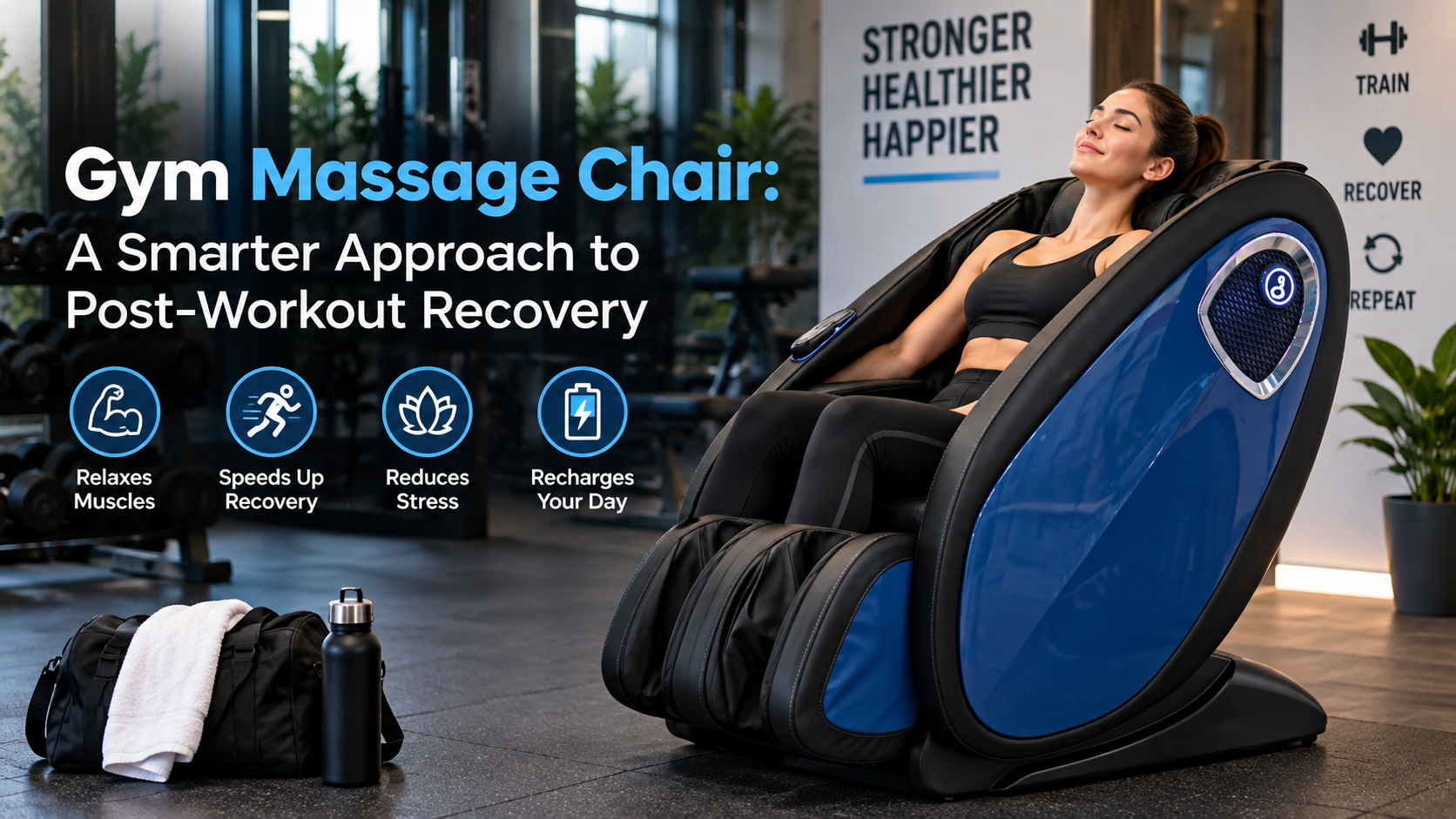
Gym Massage Chair: A Smarter Approach to Post-Workout Recovery
A great workout can leave you feeling accomplished, but it can also leave your body ready for a break.
You've finished your final set, put away the weights, and completed your workout. Now what?
For many fitness enthusiasts, recovery is just as important as the workout itself. Stretching, hydration, rest, and relaxation all have a place in a well-rounded fitness routine. That's where a gym massage chair can add an interesting dimension to the modern fitness experience.
Instead of leaving the gym immediately after exercising, members can have the option to sit back and enjoy a convenient massage session before heading home.
Why Are Massage Chairs Appearing in Fitness Centres?
Gyms have evolved significantly beyond rows of treadmills and weight machines.
Modern fitness centres increasingly focus on the complete member experience, including recovery, wellness, convenience, and relaxation.
A gym massage chair fits naturally into this shift because it gives members something they can use before or after a workout without requiring a separate appointment.
Imagine finishing a demanding training session and having access to a comfortable massage station just a few steps away.
For a busy member, that convenience can make wellness feel much easier to incorporate into an existing routine.
What Is a Recovery Massage Chair?
A recovery massage chair is designed to provide automated massage and relaxation functions that users can access independently.
Depending on the model, features can include:
- Robotic massage
- Air compression
- Foot and calf massage
- Reclining positions
- Zero-gravity positioning
- Multiple massage programs
- Adjustable intensity
- Automated operation
The purpose isn't to replace professional physiotherapy or medical treatment. Instead, the chair can provide a convenient relaxation experience that complements a person's existing fitness routine.
Gagake's commercial G-01 Full-Body Pod Massage Station, for example, combines robotic massage with airbags, zero-gravity positioning, multiple programs, and foot and calf massage.
Why Recovery Matters After Exercise
Exercise places demands on the body.
Whether someone is lifting weights, running, cycling, taking fitness classes, or participating in sports, the body needs time to recover.
That doesn't mean every workout requires an elaborate recovery routine. Sometimes, recovery can simply mean slowing down.
Taking a few minutes to sit comfortably can provide a mental transition between intense exercise and the rest of the day.
This is where a massage chair for gyms can become more than just another piece of equipment. It can create a dedicated space where members know they can pause and unwind.
Could Massage Chairs Improve the Gym Experience?
Gym memberships are competitive.
People have countless options when choosing where to exercise, so fitness centres need to think beyond equipment and membership pricing.
Small additions can influence how members perceive the overall experience.
A massage chair can become one of those additions.
Someone might finish a workout and think:
"I'm going to stay for another 15 minutes and relax."
That additional experience can make the gym feel less transactional and more wellness-focused.
For fitness businesses, this supports a broader fitness centre wellness approach where exercise and relaxation exist within the same environment.
Before or After a Workout?
One interesting thing about massage chairs is that they aren't limited to one particular moment.
Some people may prefer using one after exercising when they want to relax.
Others may simply want a short break before beginning their workout.
The important consideration is that a massage chair provides flexibility.
Members can decide when they want to use it based on their own routine and comfort.
Users should always follow the manufacturer's instructions and seek appropriate professional advice if they have an injury, medical condition, or other concern that could affect whether massage equipment is suitable for them.
What Makes a Commercial Chair Suitable for Gyms?
A massage chair placed inside a fitness centre needs to handle a very different environment from a chair used occasionally at home.
Commercial locations may have numerous users throughout the day.
That means businesses should consider:
- Durability
- Ease of cleaning
- Simple controls
- Payment options
- User comfort
- Maintenance
- Available floor space
- Visibility
- Operational support
Self-service functionality can also make the concept easier to integrate into a busy gym.
iSPA Express's commercial stations are designed for self-service environments, with contactless payment options and automated operation. The company also states that its stations are suitable for gyms and other high-traffic venues.
What About Post Workout Recovery?
The period immediately following exercise can become an opportunity to slow down.
Instead of rushing out of the gym, members can take a few minutes to transition from an active state to a more relaxed one.
This doesn't mean a massage chair should be considered a substitute for proper recovery practices or professional care.
Rather, it can become one part of a broader post workout recovery routine.
For some members, that might mean stretching first and then using the chair.
For others, it may simply mean sitting down, relaxing, and allowing themselves a few quiet minutes before continuing their day.
Could It Become a New Gym Revenue Stream?
For gym owners, there is another side to the idea.
A massage chair doesn't necessarily have to be offered as a complimentary amenity.
Depending on the operating model, individual sessions can potentially become an additional revenue opportunity.
This can be particularly interesting because the equipment occupies relatively little space compared with building a dedicated spa or recovery room.
Gagake's iSPA location-partner model offers commercial venues an opportunity to host self-service massage stations, with the company handling setup, maintenance, and operations under its partnership structure.
For a fitness centre, this can mean adding a wellness service without creating an entirely new department.
Where Should a Gym Place a Massage Chair?
Location can strongly influence usage.
A chair hidden behind equipment may not attract much attention.
A chair placed near a lounge, entrance, recovery zone, or other natural pause point may be much easier for members to discover.
The ideal space should provide:
- Good visibility
- Easy access
- Enough room for users
- A comfortable environment
- Minimal interference with gym traffic
The goal isn't simply to find an empty corner. It's to find a space where relaxation makes sense.
The Fitness Industry Is Moving Beyond the Workout
The modern fitness experience is increasingly about the person—not just the workout.
People want strength.
They want endurance.
They want flexibility.
But they also want recovery, relaxation, and convenience.
A gym massage chair can fit into that broader evolution by giving members another way to make wellness part of their regular routine.
And that may be the real opportunity.
Not turning a gym into a spa.
Not replacing professional recovery services.
Simply giving people one more reason to take care of themselves.
Bringing On-Demand Relaxation Into Canadian Fitness Spaces
iSPA Express provides self-service massage stations designed for commercial environments, including gyms, hotels, airports, shopping centres, and other high-traffic locations. Its model combines automated massage technology with a convenient, self-service customer experience.
For fitness centres, the concept is simple: give members a place to slow down after they speed up.
Because sometimes the best way to finish a workout isn't with another exercise.
It's with a few minutes to breathe, relax, and recharge.


Frequently Asked Questions
Yes. Commercial massage stations can be placed in fitness centres and other wellness-focused environments.
No. They provide an automated relaxation experience and should not be treated as a substitute for medical or professional treatment.
Many commercial models are designed for self-service use and can operate with automated payment and session controls.
Depending on the business model, paid massage sessions can provide an additional revenue opportunity while adding another amenity for members.